

How to Comfort a Friend Who Lost a Parent: A Compassionate Guide for 2026
What if your silence is actually louder than the 'wrong' words you're so afraid of saying? It's incredibly hard to know how to comfort a friend who lost a parent without feeling like you're overstepping or being awkward. You want to be their rock, but the fear of doing 'too much' or 'too little' often keeps you frozen. With national funeral costs hitting over $8,300 in 2026, your friend is likely juggling immense practical stress alongside their heartbreak. It's a lot for anyone to handle alone, and feeling helpless is a heavy weight to carry.
You're in the right place to find real, actionable answers. We'll show you exactly how to navigate these delicate moments so you can feel confident in your support. This guide covers the best things to say, how to provide help that actually lightens their load, and how to choose a gift that honors their loss. From a cozy Personalized Fleece Blanket to a beautiful Forever Love Necklace, you'll learn how to give a gesture that maintains your bond for years to come. Let's make sure your friend feels seen, loved, and supported!
Key Takeaways
- Understand the unique emotional weight of losing a parent and why your consistent presence is the most powerful way to validate their grief.
- Master the specific phrases that offer real comfort while steering clear of "toxic positivity" and common "at least" statements that can accidentally hurt.
- Learn how to comfort a friend who lost a parent by shifting from asking "what can I do?" to taking proactive, practical tasks off their plate.
- Discover why a high-quality keepsake, like a meaningful necklace or plaque, provides deeper and more lasting support than traditional flowers.
- Get a roadmap for helping your friend navigate painful "firsts" and major milestones, ensuring they feel supported long after the initial cards stop arriving.
The Unique Weight of Losing a Parent: Why Your Presence Matters
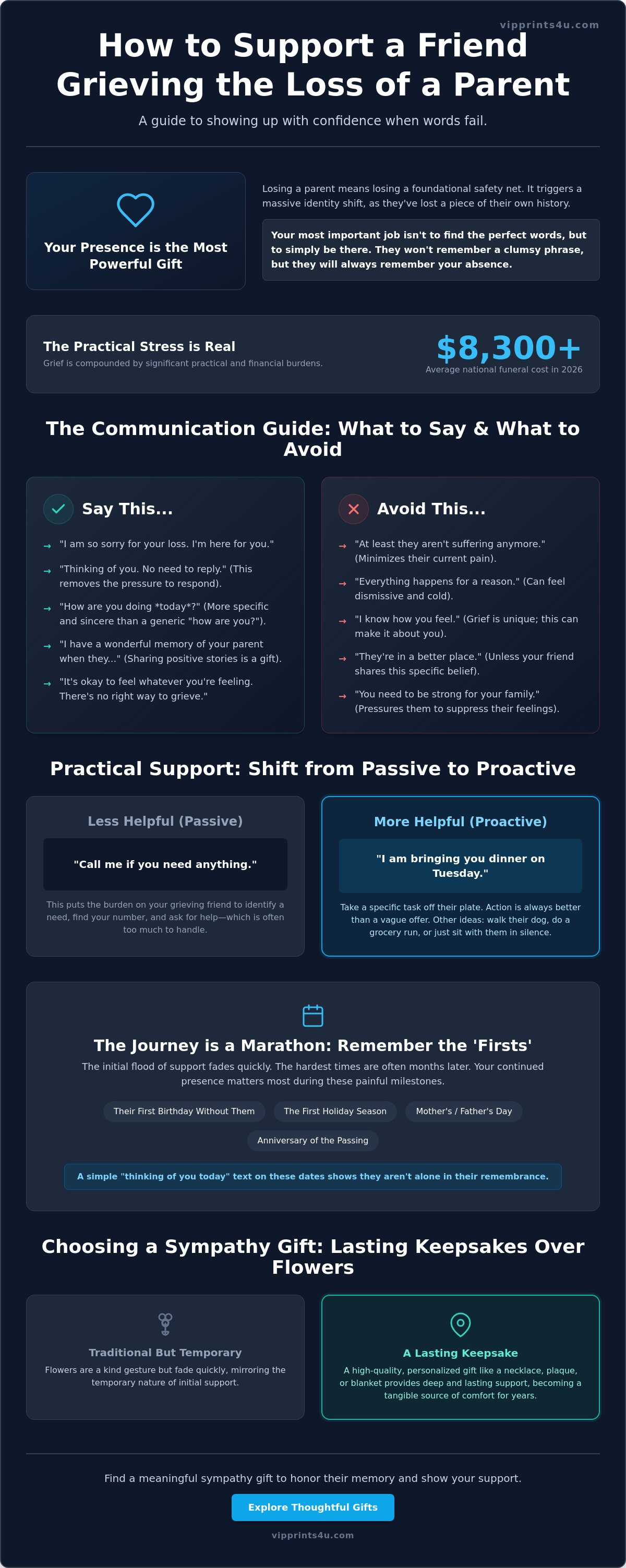
Losing a parent isn't just another sad life event. It's the moment the world's primary safety net disappears. For most of us, our parents are the first people who ever knew and loved us. When they pass, that foundational support system vanishes, leaving a void that feels impossible to fill. You might feel totally out of your depth trying to figure out how to comfort a friend who lost a parent, but remember that your presence is the most powerful tool you have. The grieving process is a messy, non-linear journey that doesn't follow a script, and your friend needs to know they don't have to walk it alone.
Validate their feelings constantly. Tell your friend it's okay to feel whatever they feel right now. Rage, numbness, or even a strange sense of relief are all valid emotions. There's no "right way" to grieve. Society often treats the loss of a mother as the loss of the home's emotional heart, while losing a father is frequently seen as losing a protector or provider. Both are devastating in their own ways. Don't try to give advice or "fix" the situation. Your job isn't to be a therapist; it's to be the person who stays when everyone else leaves.
The Identity Shift in Parental Loss
Losing a parent often triggers a massive identity crisis. Suddenly, your friend might feel like an "adult orphan," regardless of whether they're 25 or 55. The person who held the map to their childhood is gone, and "home" might not feel like a physical place anymore. Parental bereavement is a lifelong journey of integration rather than a problem to be solved. Acknowledge this massive shift in their world. They aren't just losing a person; they're losing a piece of their own history and a witness to their entire life.
Why 'Showing Up' is Your Most Important Job
Stop worrying about being awkward. Your friend is in so much pain that they won't remember if you said something slightly clumsy, but they will definitely remember if you weren't there. Real support is active, not passive. Instead of saying "call me if you need anything," which puts the burden on them, just show up with coffee or a meal. Being a silent supporter means sitting on the couch with them while they stare at the wall. It's about being the person who doesn't require them to "perform" or act like they're holding it together. Learning how to comfort a friend who lost a parent starts with the simple, brave act of just being in the room when the silence gets too loud.
What to Say (and What to Avoid) When Words Fail
Finding the right words often feels like walking through a minefield. You're terrified of saying something that might sting, yet staying silent feels cold. Here's the truth: your friend doesn't need a perfect speech. They need to know you aren't running away from their pain. Instead of trying to relate with "I know how you feel," stick to "I'm here for you." This simple shift validates their unique experience without making the conversation about your own history. It's a great way to support a grieving loved one without putting pressure on them to perform or pretend they're okay.
Avoid "toxic positivity" at all costs. Phrases like "at least they aren't suffering anymore" or "everything happens for a reason" can feel incredibly dismissive to someone in deep pain. These "at least" statements often shut down the emotional connection instead of opening it. If you want to know how to comfort a friend who lost a parent, try sharing a specific, happy memory of the deceased instead. Tell them about the time their dad gave the best advice or how their mom always made everyone feel welcome. Those memories are precious gold during the dark days of early grief.
Supportive Scripts for Different Situations
Timing changes everything. At the funeral or wake, keep your message brief and heartfelt. "I'm so sorry for your loss; I'm here if you need to talk" is plenty. The real challenge starts a week later when the initial crowd of supporters fades away. Send a text like: "I’m holding space for you today. No need to reply, just wanted you to know I’m thinking of you." This "no-reply" text is a modern gift. It shows you care without giving them a digital chore to complete. Ask open-ended questions like "How are you doing in this specific moment?" rather than a generic "How are you?" which usually triggers a reflexive, dishonest "I'm fine."
The 'What Not to Say' Checklist
Even with the best intentions, certain phrases can backfire. Keep these points in mind to remain truly supportive:
- "Let me know if you need anything." This sounds helpful, but it actually gives your grieving friend a job to do. They have to identify a need, find the energy to ask, and then coordinate with you. Just do something specific instead, like dropping off a meal.
- Comparing losses. Never compare the death of their parent to the loss of a pet or a distant relative. Every grief is its own island, and how to comfort a friend who lost a parent involves respecting the magnitude of this specific bond.
- Religious platitudes. Unless you are 100% certain of their faith and that they find comfort in those specific words, avoid them. Focus on human connection and shared love first.
Sometimes, words really do fail us completely. In those moments, a tangible gesture can bridge the gap and provide a lasting sense of peace. A beautiful necklace can serve as a wearable hug they can hold onto when the world feels a little too empty.
Practical Ways to Help Beyond the First Week
The first week after a loss is usually a blur of phone calls, flowers, and visitors. But once the funeral ends, the silence can be deafening. This is exactly where most people drop the ball. If you really want to know how to comfort a friend who lost a parent, your support needs to kick into high gear at the two-week and one-month marks. This is when the "admin of death" starts piling up. Dealing with lawyers, cleaning out closets, and handling endless paperwork is exhausting. Offer to help with these logistics if you're close enough; sometimes just having someone to hold the clipboard makes a world of difference!
Don't try to do it all yourself. Create a "care circle" with other friends to rotate support. Use a group chat or a shared calendar to ensure your friend has a steady stream of meals or check-ins without being overwhelmed by five people showing up on the same Tuesday. It's all about consistent, sustainable kindness that proves you aren't going anywhere. You can find even more expert advice on supporting a grieving friend to help you stay the course during these difficult months.
Specific Tasks That Actually Help
Stop asking "what can I do?" because your friend likely doesn't even have the energy to think of an answer. Just do. Drop off a bag of groceries with easy-to-prep snacks and comfort foods. Order a surprise pizza to their house at 6 PM. Offer to walk the dog, mow the lawn, or handle the school carpool for a few days. Specific offers beat general availability every time because they remove the mental burden of decision-making from someone who is already completely overwhelmed. These small, tangible actions show you're paying attention to their actual life.
Maintaining Long-Term Support
Grief doesn't have an expiration date, and the pain often intensifies once the initial shock wears off. Set calendar reminders for the three-month and six-month anniversaries of the loss. These are often the loneliest times when everyone else has moved on. Send a "no-reply-needed" text just to say you're thinking of them. It's a low-pressure way to show you haven't forgotten their heartbreak. Invite them to low-key outings like a walk in the park or a quiet movie night where they can just "be" without having to entertain anyone. If you're looking for a way to wrap them in literal warmth, a Personalized Fleece Blanket from our bestsellers collection is a beautiful way to offer a hug they can feel even when you're not there!
Choosing a Sympathy Gift That Honors Their Parent’s Memory
Flowers are a classic gesture, but they eventually wilt and need to be thrown away. When you're figuring out how to comfort a friend who lost a parent, consider a gift that lasts as long as their memories. Tangible keepsakes provide a physical anchor during the storm of grief. Psychologists often refer to these as "transitional objects." They give your friend something concrete to hold onto when their world feels empty and abstract. Creating a dedicated space for remembrance helps them process the loss in their own time and on their own terms.
A well-chosen gift shows that you recognize the magnitude of their loss. It says you aren't just checking a box, but truly honoring the person who shaped your friend's life. Whether it's something they can wear every day or an item that brings warmth to their home, the goal is to provide lasting comfort. These gestures become even more important after the first month, when the initial wave of support starts to recede. It's about giving them a "soft place to land" whenever the waves of grief hit hardest.
Sentimental Jewelry: A Close-to-Heart Reminder
Jewelry is more than just an accessory; it's a talisman of love. The Eternal Hope Necklace serves as a stunning symbol of strength that can brighten even the darkest days of bereavement. If your friend finds peace in their faith, the Cross Necklace offers a constant, quiet reminder of spiritual support. For that unbreakable parent-child connection, the Interlocking Hearts Necklace beautifully represents an eternal bond that death cannot sever. These pieces allow your friend to carry their parent's memory with them wherever they go.
Comforting the Home: Plaques and Blankets
Your friend's home should be a sanctuary of healing. A Square Acrylic Plaque featuring a meaningful quote can turn a simple shelf into a sacred memorial corner. It's a modern, elegant way to keep a parent's wisdom visible every day. On those long, lonely evenings when the house feels too quiet, the physical "hug" of a Personalized Fleece Blanket provides genuine sensory comfort. We also highly recommend encouraging them to use a journal to write down favorite stories and lessons. This simple act keeps the parent's spirit alive and ensures their legacy is never forgotten.
Ready to send a gesture that truly matters? Choose a high-quality tribute from our bestsellers and show your friend they aren't alone in their journey!
Helping Your Friend Navigate the 'Firsts' and Holidays
The first year after a loss is a gauntlet of "firsts" that can catch even the strongest person off guard. Everyone expects the funeral to be difficult, but the first Mother's Day, Father's Day, or the parent's birthday often hits with a surprising, sharp intensity. Knowing how to comfort a friend who lost a parent means looking ahead at the calendar and anticipating these painful milestones. Don't wait for them to reach out. Be the person who sends a text on a random Tuesday when you know they’re missing their dad’s advice or their mom’s laugh.
Major life events like weddings, graduations, or a new baby can also trigger fresh waves of sorrow. Acknowledge the parent's absence during these times instead of ignoring it. Say their name out loud. It isn't "reminding" them of the loss; they haven't forgotten for a single second. It's validating that the parent’s legacy still matters and that they are missed by others too. Surprisingly, the second year can often feel heavier than the first. The initial shock has worn off, the "new normal" feels permanent, and the world often expects them to be "over it." Stay consistent in your support long after the first anniversary passes.
The First Holiday Season
Holidays often amplify the empty chair at the table. You can make a huge difference by sending a "thinking of you" card specifically on the deceased parent’s birthday. It shows you remember the date and the person. Consider gifting a custom ornament to help them keep their parent as a visible part of the family tree. These small, intentional gestures prove that while the person is gone, their presence in your friend's life is still honored and cherished by those around them.
Signs Your Friend Might Need Professional Help
Grief is a heavy burden, but sometimes it crosses the line into something more complex. If your friend is struggling to function after several months, they might be experiencing prolonged grief disorder or clinical depression. In 2026, individual grief counseling sessions typically cost between $100 and $250. However, there's good news for those with coverage. Medicare Part B now covers grief counseling if it's deemed "medically necessary." The standard Part B deductible for 2026 is $283, after which patients usually pay 20% of the Medicare-approved cost.
Gently suggest professional support if you notice they’re completely withdrawing or unable to manage daily life. You can say, "I've noticed you're having a really tough time lately, and I want you to have the best support possible." Provide resources like local support groups or GriefShare, but keep being their friend first. Your role isn't to be their therapist, but to be the person who holds their hand while they find the professional help they need. Real friendship is about walking beside them through the darkest valleys until they find the light again.
Be the Steady Support Your Friend Needs Today
You now have the tools and the confidence to show up for your friend in a way that truly matters. Remember that your consistent presence is far more valuable than finding the perfect words. Focus on taking over specific chores and staying close during those difficult "firsts" when the rest of the world has moved on. Learning how to comfort a friend who lost a parent is a journey of patience and genuine love. You don't have to be a grief expert; you just have to be a friend who stays.
A tangible token of remembrance can provide a soft place to land during the loneliest moments. We've designed high-quality keepsakes that are meant to last a lifetime, featuring hand-selected sentimental messages that speak when you can't. Whether your friend is across the street or across the globe, our worldwide shipping ensures your support arrives right at their door. Browse our Sentimental Jewelry Collection to find a heartfelt gift that honors their parent's memory. You've got this, and your friend is so lucky to have you in their corner!
Frequently Asked Questions
What is the best thing to say to a friend who just lost a parent?
The best thing to say is a simple, heartfelt "I am so sorry, and I'm here for you." You don't need to have a perfect speech prepared to be effective. Focus on validating their pain without trying to fix it or offering unsolicited advice. Your sincerity matters much more than your eloquence, so just be honest about your support.
Is it okay to send a gift several weeks after the funeral?
It's actually one of the most meaningful times to send a gift because most people stop reaching out after the first ten days. Sending a gesture later shows your friend that you haven't forgotten their heartbreak. This is a brilliant way how to comfort a friend who lost a parent because it provides a boost of support exactly when the initial crowd of helpers starts to fade away.
How often should I check in on my grieving friend?
Aim to check in every few days for the first two weeks, then at least once a week for the following few months. Consistency is your secret weapon here. Use "no-reply-needed" texts to show you're thinking of them without adding a social obligation to their plate. Your steady presence proves that you're a reliable part of their long-term safety net.
What should I avoid doing when someone is grieving a parent?
Avoid disappearing because you feel "awkward" or unsure of what to do. Your silence can feel like abandonment during such a vulnerable time. Also, stay away from "at least" statements or comparing their loss to the death of a pet. These comments often minimize their unique pain. Just stay present and listen without judgment.
Should I bring up the parent's name or will it make my friend sad?
You should absolutely say the parent's name out loud! Your friend is already thinking about them every single minute, so you aren't "reminding" them of the loss. Hearing the name validates that their parent was an important person whose memory still lives on in others. It's a beautiful way to honor the legacy they left behind.
What are some meaningful sympathy gifts besides flowers?
Tangible keepsakes like a Forever Love Necklace or a Square Acrylic Plaque are fantastic alternatives that last forever. While flowers wilt within a week, a high-quality piece of jewelry or home decor serves as a permanent "memory holder." These items offer sensory comfort and a physical connection to their parent's love during the most difficult days of their journey.
How can I help a friend who lives far away and just lost a parent?
Send a high-quality keepsake directly to their door using worldwide shipping to bridge the distance. You can also organize a digital meal delivery or send a Personalized Fleece Blanket to give them a "virtual hug." Knowing how to comfort a friend who lost a parent from afar is all about sending tangible reminders that they are loved and seen, no matter the mileage between you.
Disclaimer
Images and Products might differ. Please contact support if in doubt, and confirm before buying to expedite returns and avoid rejection.